

One year to turn a school project into a real product
Kura is my final-year project at HETIC. We started in October 2025 with interviews; Kura went to production on 10 July 2026 with its first clinic, and it is still running.
A team of three: a business co-founder, a second designer and me. One year to ship something real. I owned the product, its vision, its design and the code behind it.
Vet nurses spend their days on the phone, reassuring
We began with owners: how do you know whether a sign is worth a visit? Eight interviews and a survey confirmed the owners’ anxiety, not the answer to it. The turn came from the clinics. After a sterilisation, the days that matter happen at home, and the nurses fill the gap by phone, between two consultations.
“I spend more than 15 hours a week on the phone, reassuring people about benign questions.”
 A vet nurseInterview · Dec 2025 · translated from French
We kept the subject and changed who we serve
We decided to change who we were talking to, and started a round of interviews with vet clinics. The pain was organisational, not medical, and the clinic was the one paying for it in time. Kura became follow-up sold to the clinic, in the one place owners already are.
Before writing real code, we put together a quick prototype, with n8n as the backend and a dashboard generated in Lovable, to test and sell the idea of an automated post-op follow-up on WhatsApp.
No app, no call: checkups in WhatsApp, a triage for the clinic
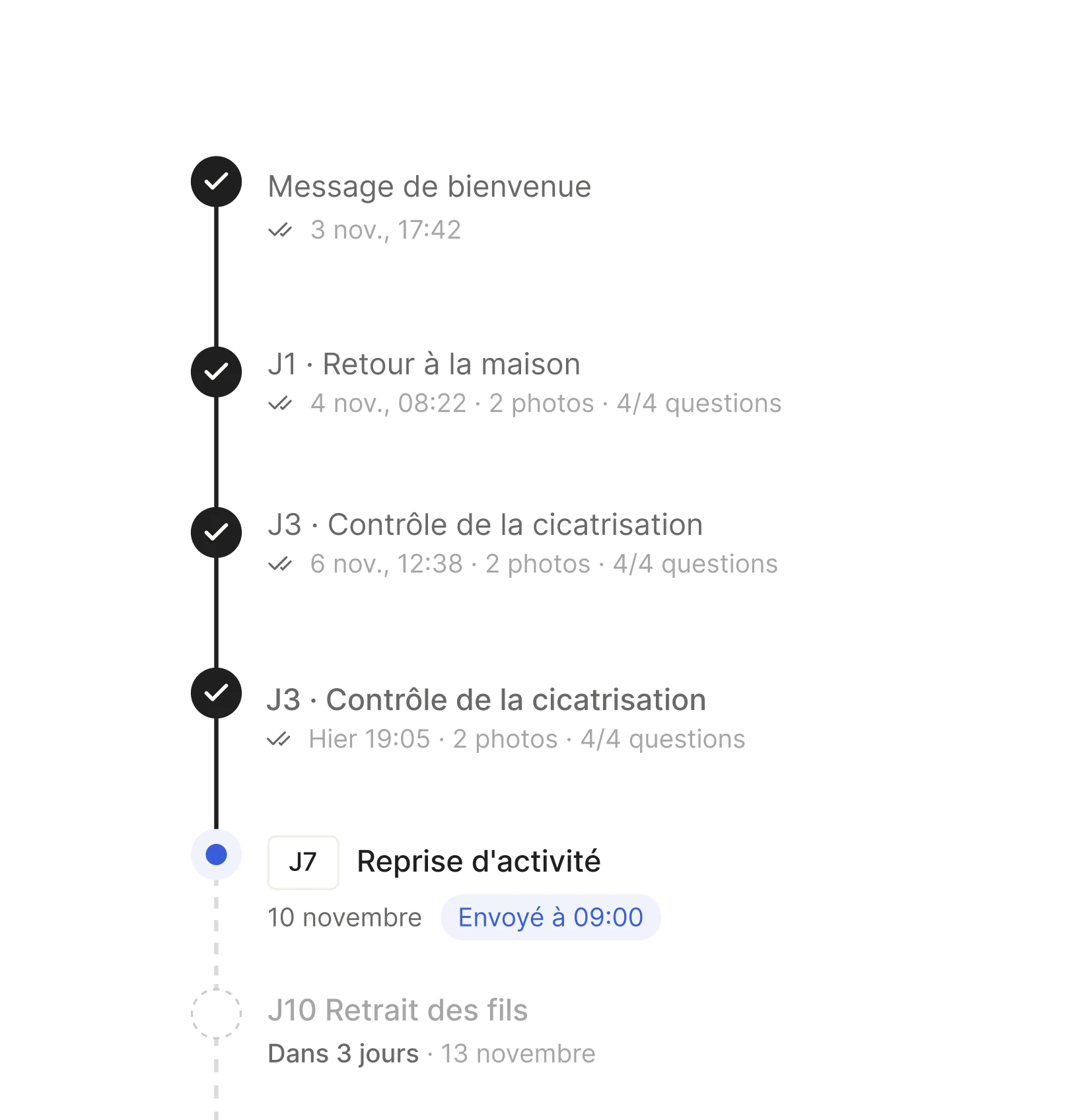
Owners don’t install anything: they only use WhatsApp to talk with their clinic. Kura writes to them on a protocol built with the clinics for each type of surgery. A few questions each time, answered with buttons, free text or a photo of the wound. Every owner of the beta started their follow-up, and answered in one to three minutes.
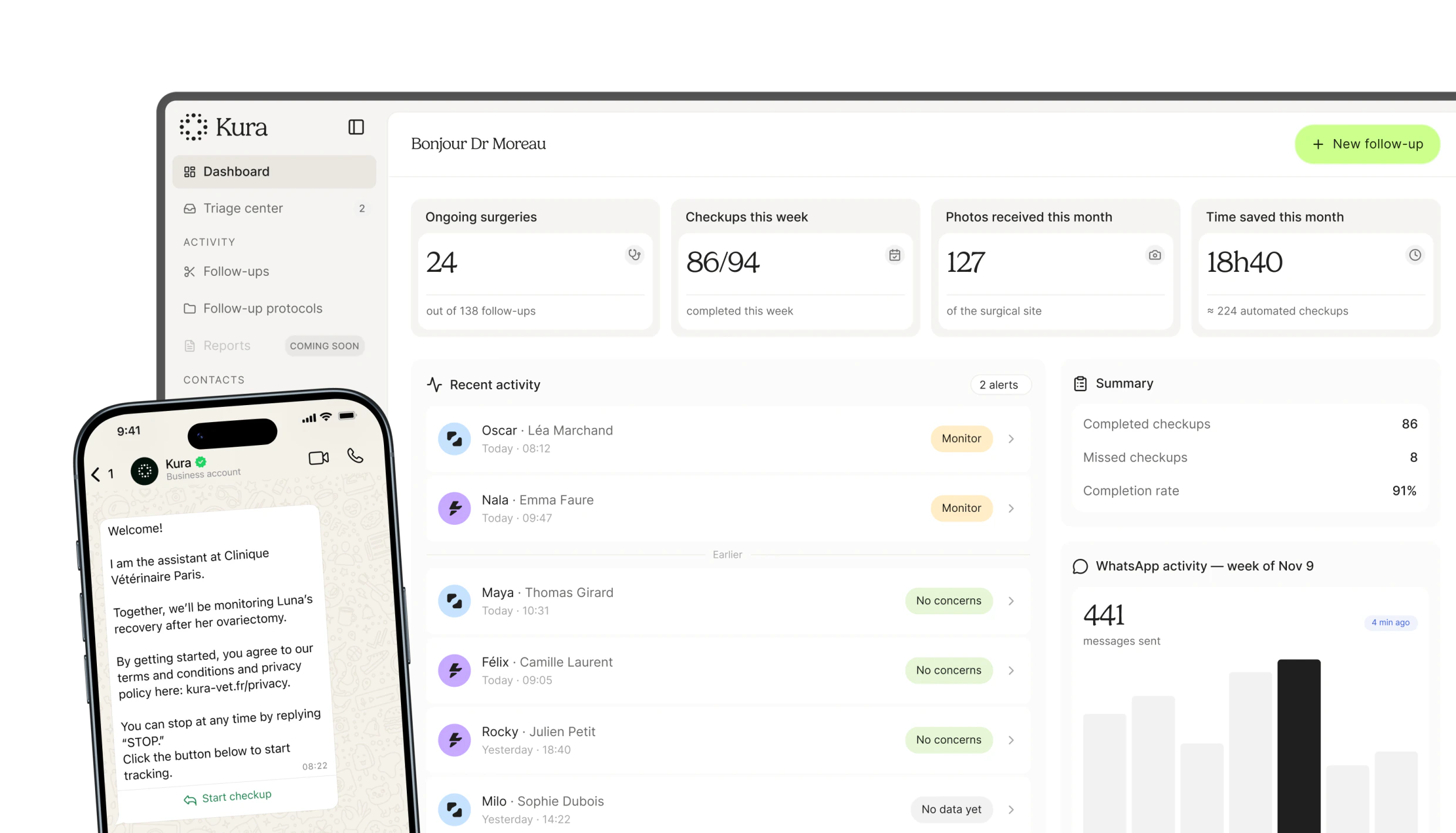
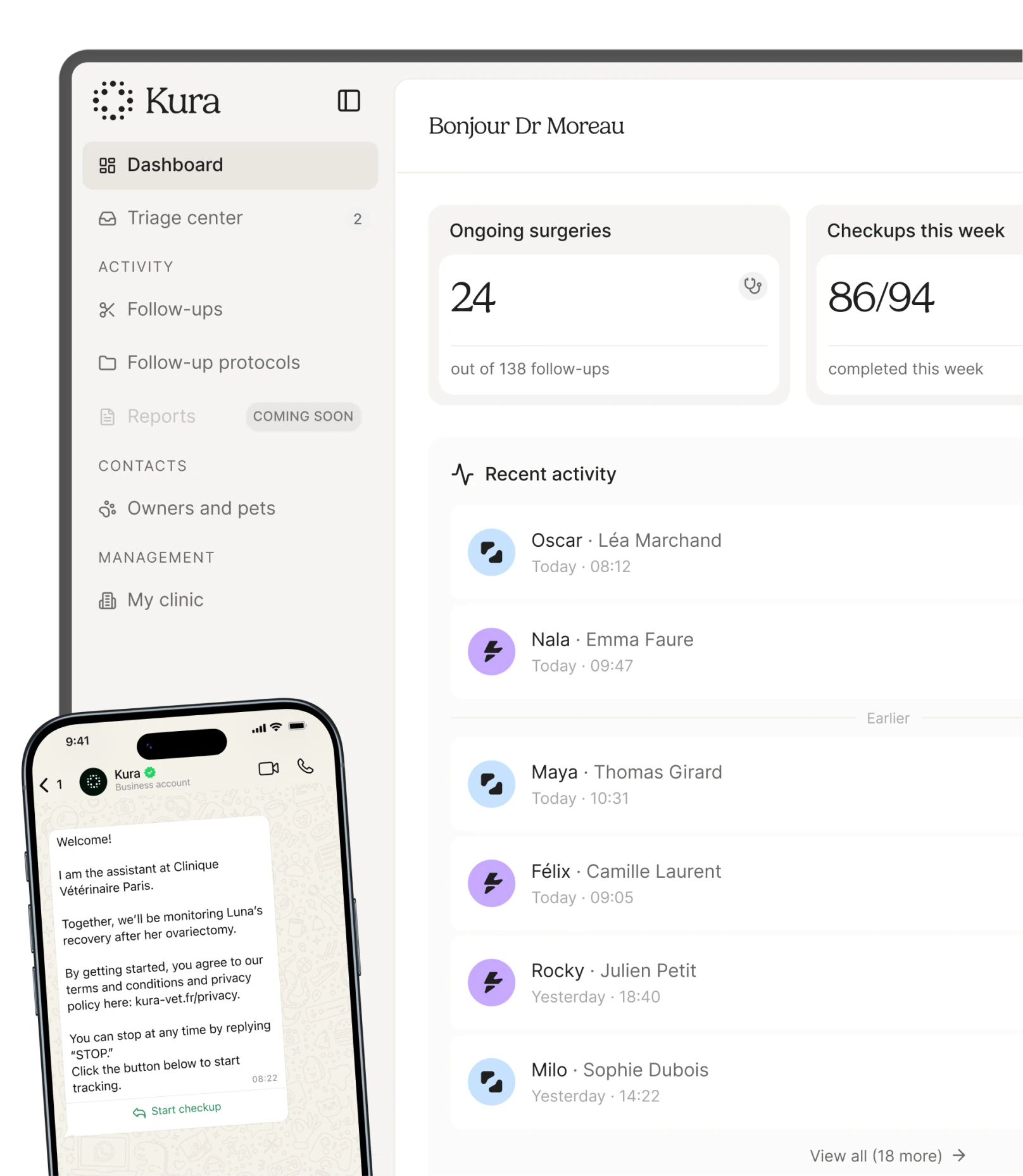
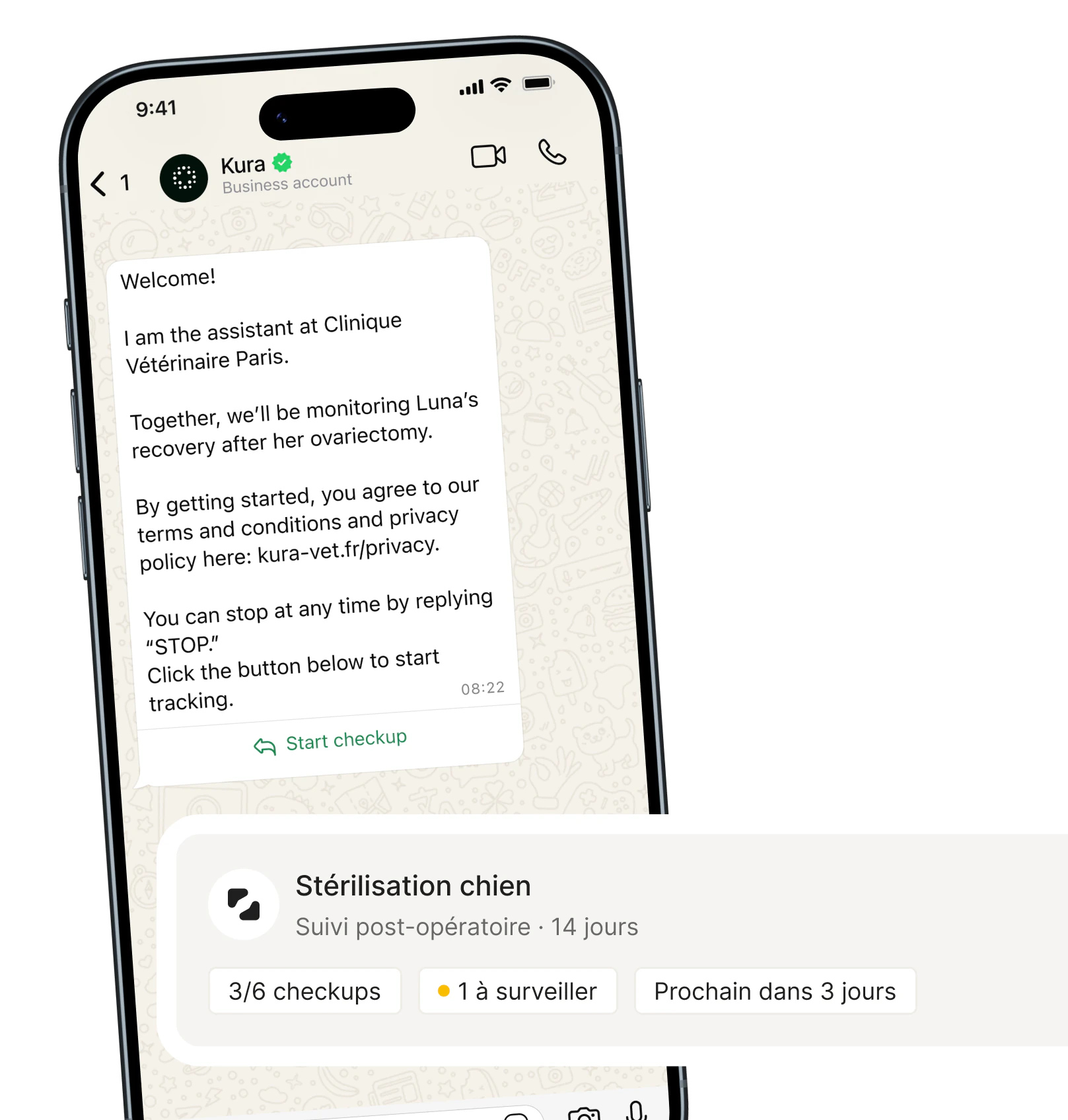
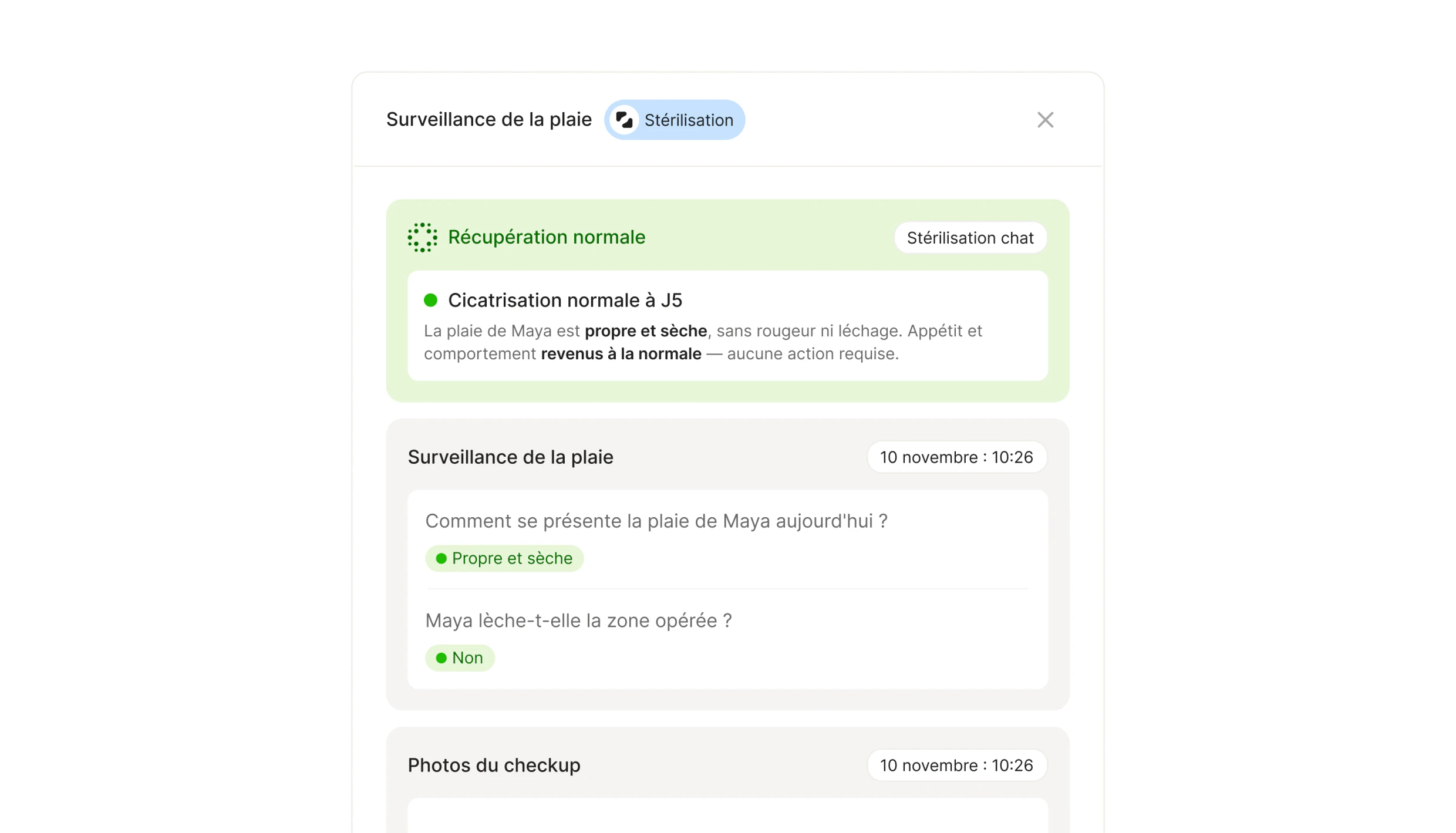
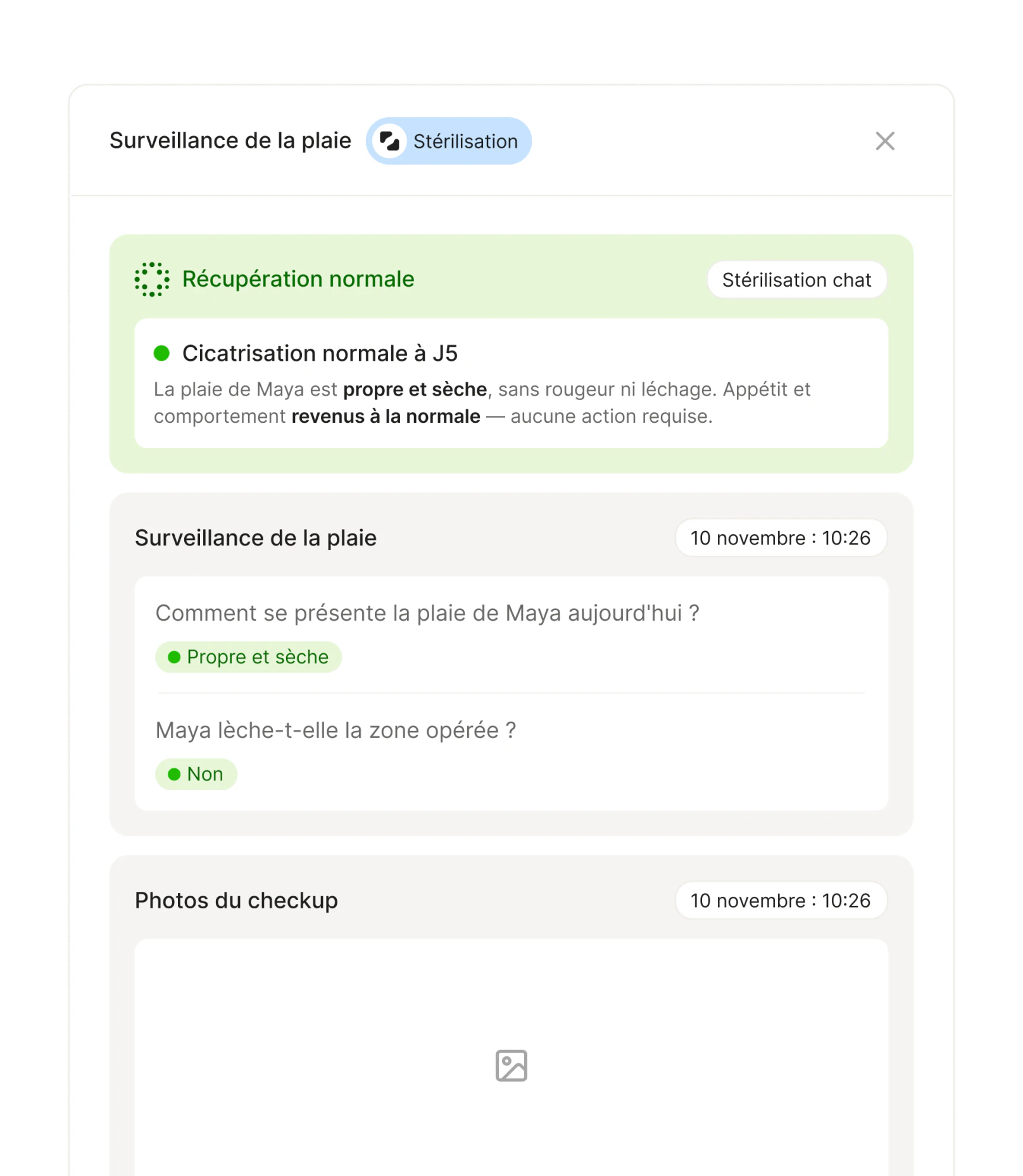
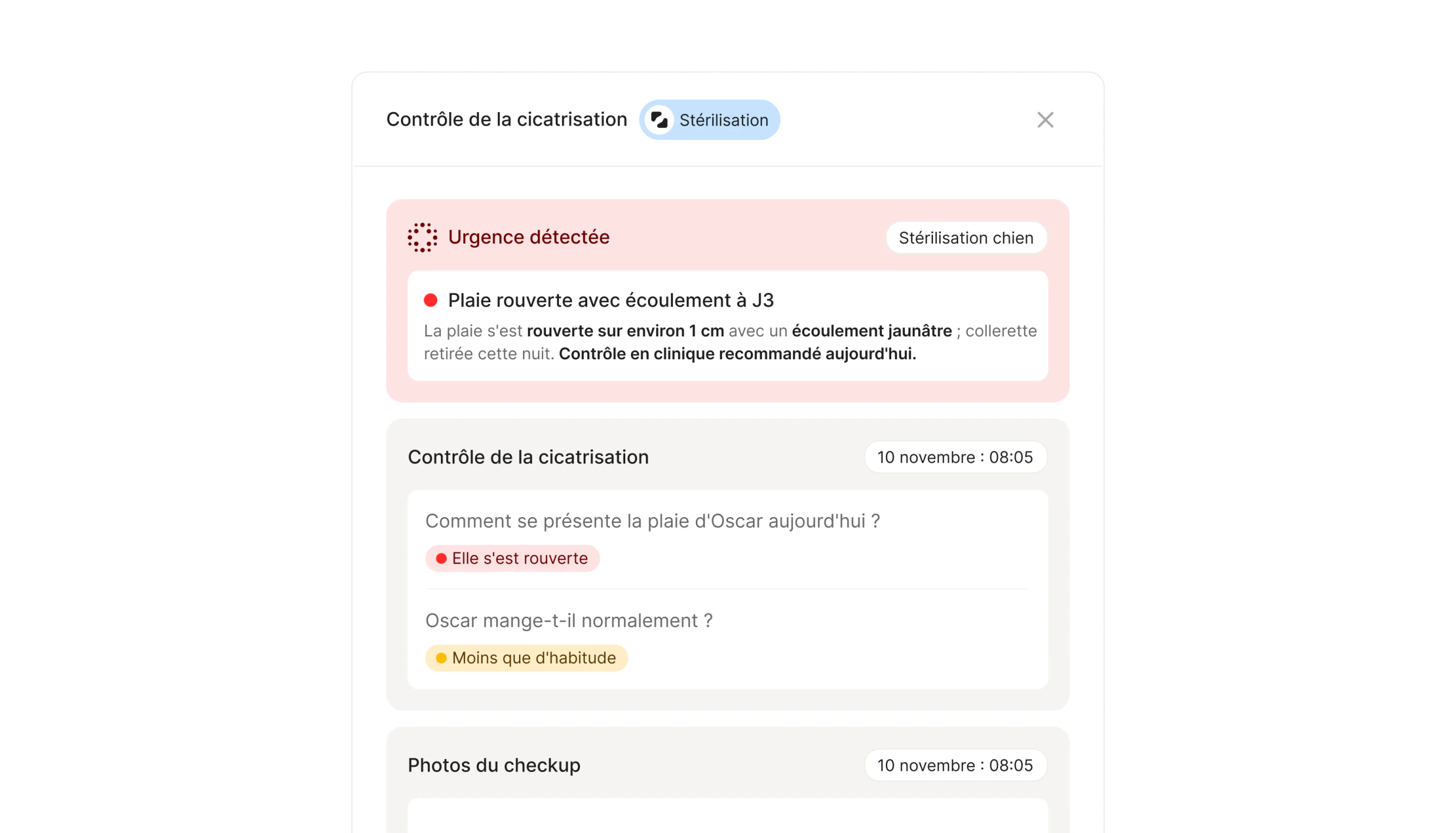
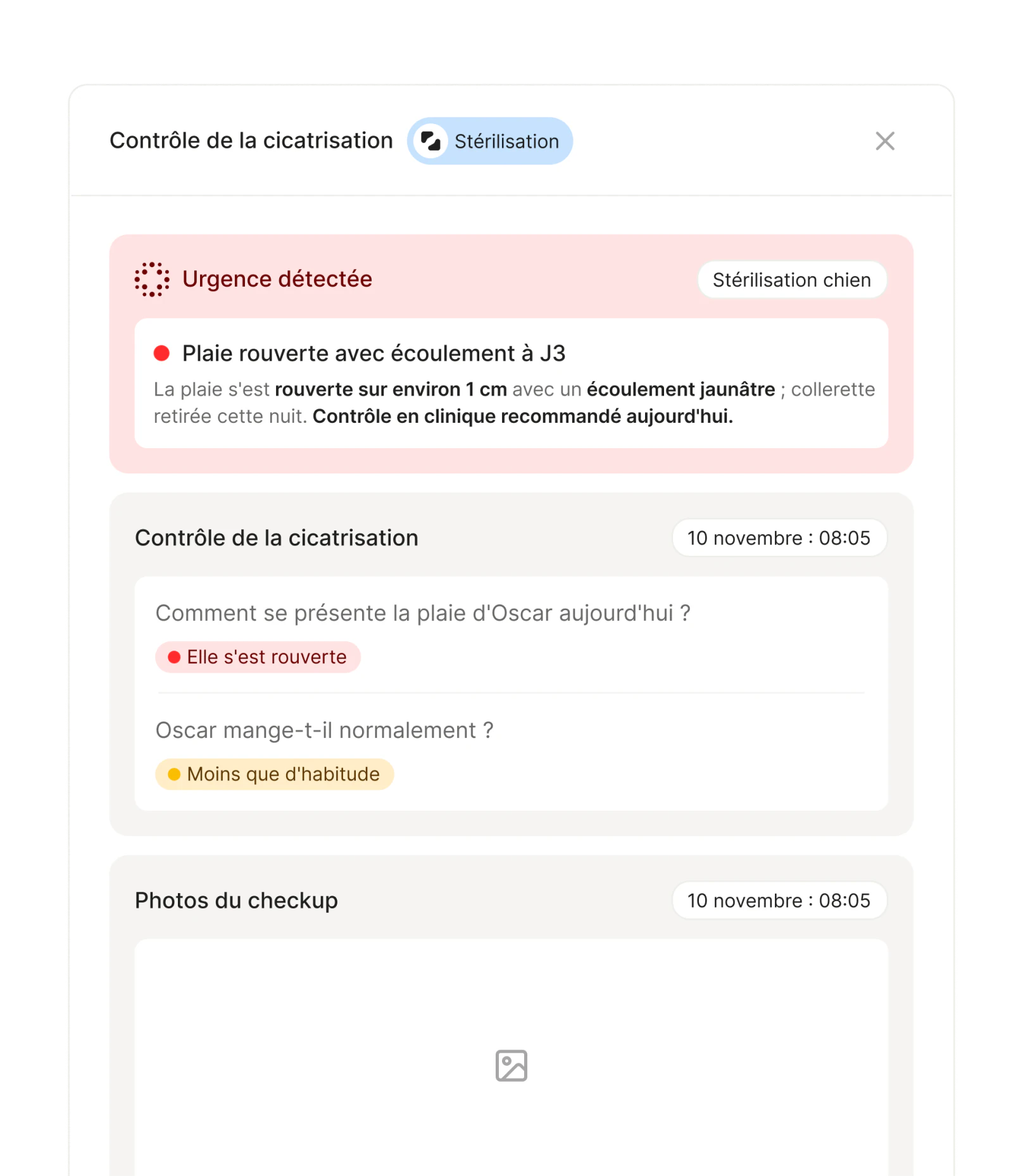
The clinic doesn’t read conversations. It gets a triage: every follow-up gets a severity status, and the ones that need someone come up first.
An answer, not a score. An emergency is never a threshold on a total. Each answer carries its own action, and one is enough to escalate: the owner gets the clinic’s number, the follow-up pauses until a vet takes it back. AI only summarises, a title and two lines for the vet, never a diagnosis.
I started with the back end, because that’s where the product was
Kura is the project where I learned to build a whole product, back and front. I started with the back: no interface, just the engine that sends a checkup on WhatsApp and reads the answer. A small generated front came next, only to test it; the real one replaced it once the design was ready.
The front was the easy part. I designed the screens in Figma, as usual, and found ways to shorten the handoff to a coding agent: a design system thought through before any screen, and pen.dev to pass the mock-ups on.
The back was the real lesson. All of its code is AI-generated, so my work was the specification: about twenty PRDs, Markdown files kept in the repository next to the code, and documentation kept up to date. Along the way I learned to run what I ship: a GitHub repository, a database, and above all Meta’s API, from what it allows and how, to the account verification and all the small rules around it.
One brick at a time. Getting to a complete WhatsApp engine took a lot of testing and going back: messages arriving at the wrong time or not at all, an onboarding that didn’t start, a follow-up missing from the dashboard. That was before I understood what tests and a clear, strict verification loop are worth. They are what made the project move faster: I could add a new brick on top without breaking the old ones, because everything inside the loop stayed right. Once a brick was fully tested locally, it joined the loop, and so on from one feature to the next.
I think this is how vibe coding should be done: the context and the test harness around the code matter more than the code itself.



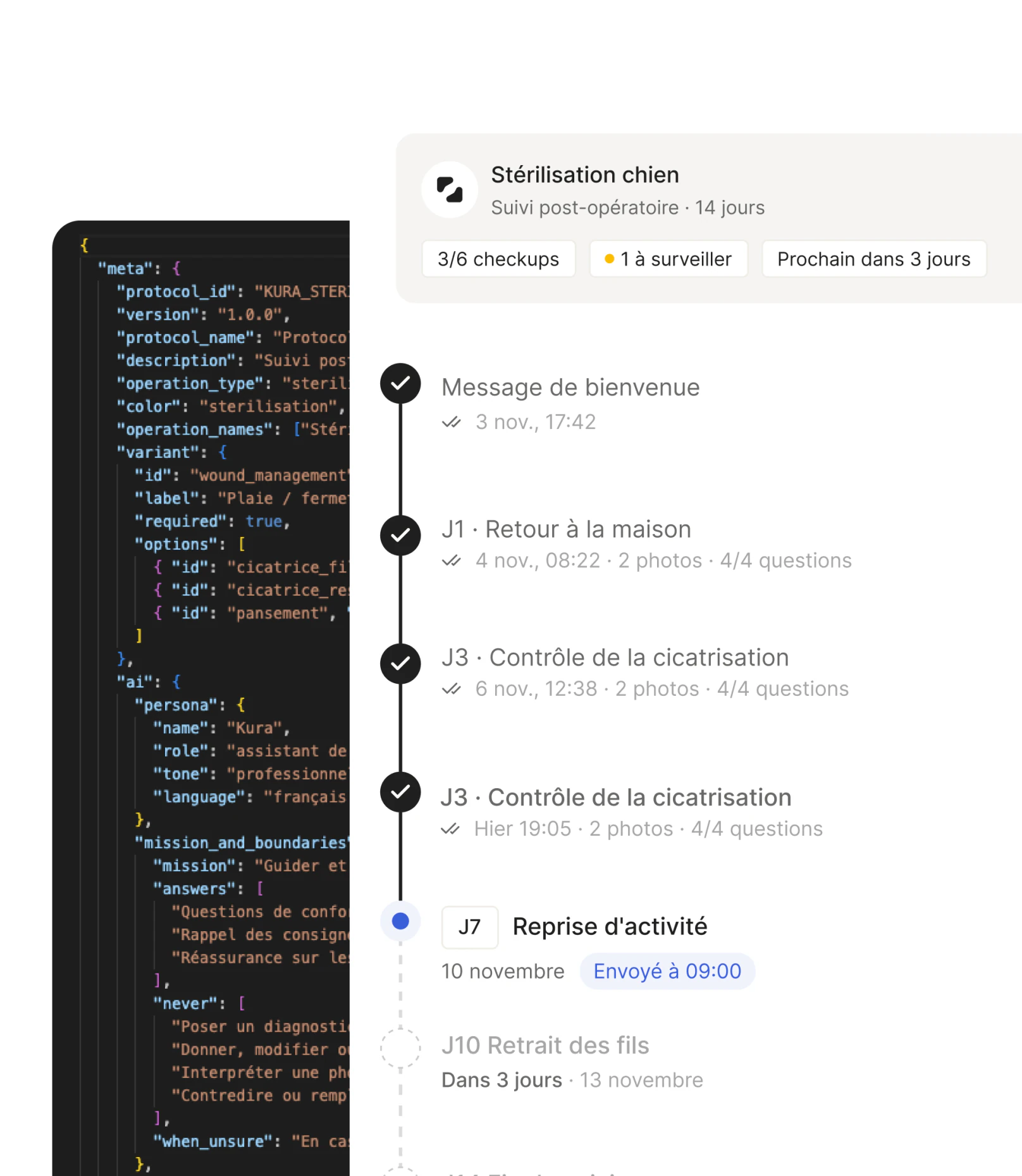
The medical protocol lives outside the code. It is a versioned JSON file: which checkups, on which day, which questions, and what each answer triggers, next question, end of follow-up or emergency. A vet writes the content; the code doesn’t move. Each clinic can have its own.
Zero silent send. The hardest bug of the beta was a quiet one. A clinic’s name saved with trailing spaces made Meta reject every message for five days, and nothing said so: on screen, the follow-ups looked fine. Now every send attempt leaves one record with its real outcome, and an empty follow-up shows “no data yet”, never a green “nothing to report”.
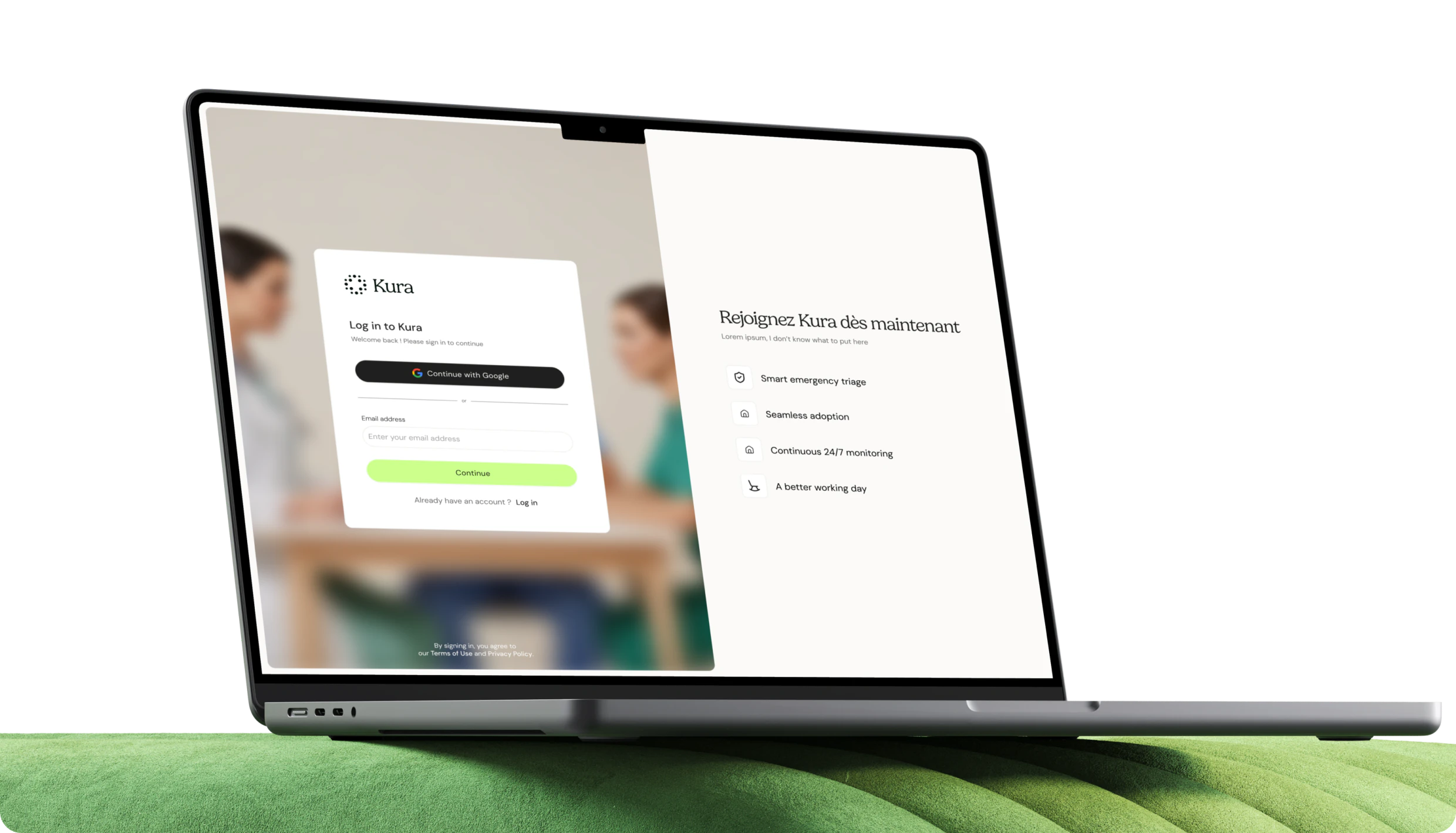
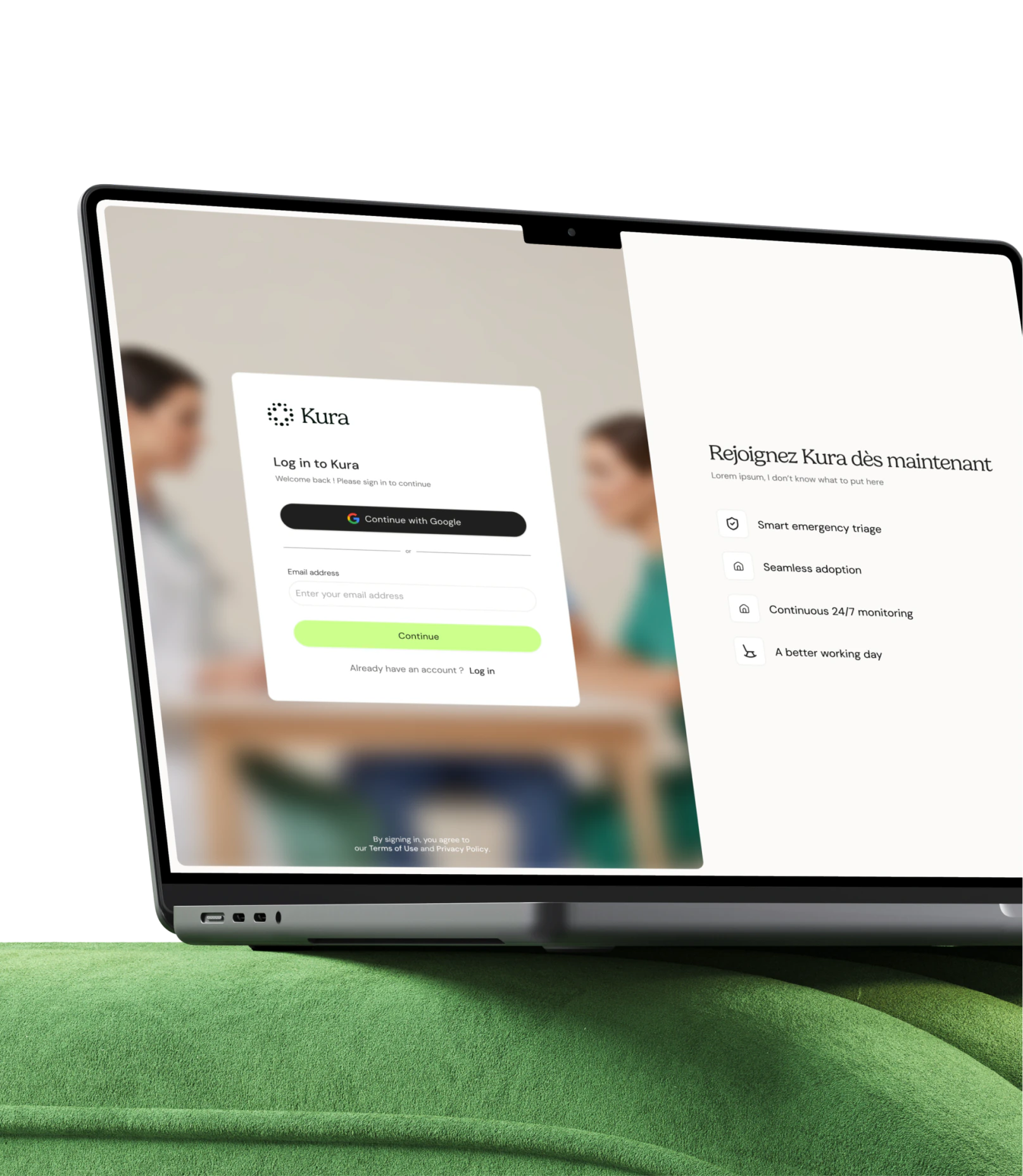
In production with two clinics, and nothing lost on the way
Kura runs in production. Two clinics use it with their own patients, one of them signed through our own outbound. What the vets liked most was not what we expected: the import of their patient files, used twice before they even created a follow-up.
- 2clinics using it with their own patients, since July 2026
- 1h15won for one follow-up
- 1–3 minto answer a checkup, at any hour